We need
Yesterday.
Election Day is on November 3, 2026!
Day(s)
:
Hour(s)
:
Minute(s)
:
Second(s)
Working People: We Have the Power to Make a State that Works for Us!
First, Get Ready to Vote
Then, Help Us Hold Election Winners Accountable
They say they’re for working people. Are they? We’re tracking how lawmakers vote and what it means for your job, your pay, and your family. Sign up for alerts and help us hold them accountable after the election to show them who has the power.
The State of Working People in North Carolina
Oxfam America recently ranked North Carolina dead last in the nation for workers’ rights and protections, a title we have held for six years running.

North Carolina has also repeatedly ranked among the best states for business. In other words, our lawmakers are making decisions that enrich corporations at the expense of working people.
At the same time, wages grew 3.4%, housing costs grew 3.6% and energy utilities grew 6%. Our legislators’ decisions made us the only state from 2023 to 2024 to experience a significant increase in income inequality.
The affordability crisis facing most North Carolinians is not an accident; it’s the result of legislators choosing corporations and the wealthiest one percent. To have a government that works for us, we must vote for candidates who support pro-worker policies and hold them accountable for their promises when in office.
Find out who is on your ballot, make your picks, and save or print your ballot to bring with you to the polls. This tool also explains each office’s role.
Constitutional Amendments on the Ballot in 2026
What IS a constitutional amendment?
The North Carolina Constitution is meant to enshrine fundamental protections or structural necessities for state governance. A proposed amendment must earn a majority of voters’ approval in order to be added to the state Constitution. Enshrining laws in the Constitution makes it harder for future legislators to change or remove them.
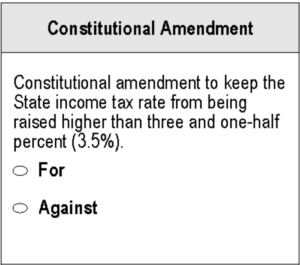
Maximum Income Tax Rate of 3.5%
What it does: Lowers the personal income tax max cap from 7% to 3.5% in the state constitution.
How it will appear on your ballot:
Impact for Working People
- The income tax cap will have no immediate effect on how much people or corporations are paying in taxes, because personal and corporate tax rates will already be below the 3.5 percent cap.
- Instead, the lower tax cap would lock in tax breaks for the wealthy few and profitable corporations, blocking lawmakers from enacting policies that would raise taxes on millionaires and corporations to increase teacher pay and more adequately fund public education.
- The amendment would block the state from generating $17 billion in annual public revenue from personal and corporate income taxes. The loss of state revenue options would hit public services like education and healthcare, or require replacing these critical funds through sales tax, fees, or other sources that would disproportionately hit working-class people.
- State legislators (the General Assembly) can already change income tax rates. The amendment would only make it harder for future lawmakers to change the tax rate. This would reduce flexibility in responding to emergencies or meeting the needs of a rapidly growing state.
VOTE AGAINST
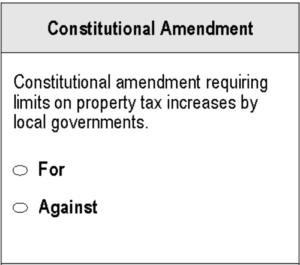
Limits on property tax increases by local governments
What it does: Requires the General Assembly to decide limits on how much revenue local governments can collect from property taxes. This amendment does not determine what that limit would be.
How it will appear on your ballot:
Impact for Working People
- Yes, property taxes are high, but there are better ways to give property tax relief to North Carolinians struggling to make ends meet.
- This is a tax break for the ultra-wealthy, saving them lots of money and only saving average people a little.
- Takes away local autonomy by creating a permanent rule that limits local governments from raising money via property taxes. Even when the community would support paying those taxes to meet people’s needs.
- Property taxes make up a third of local funding; this would cut local government provisions like school buildings, roads, parks, and infrastructure.
VOTE AGAINST
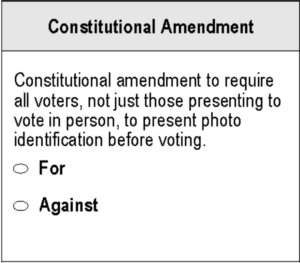
Require Photo ID for Voting
What it does: Expands the in-person voting requirement that everyone present photo identification before voting to mail-in and absentee voting.
How it will appear on your ballot:
Impact for Working People
- Creates additional barriers for voters, particularly absentee voters like college students and military service members
- Low-income people are less likely to have photo identification
- Safeguards for voter fraud already exist; this added requirement could discourage people from voting
VOTE AGAINST
Sign up for alerts and help us hold them accountable after the election to show them who has the power.
We’re tracking how lawmakers vote and what it means for your job, your pay, and your family.

QUICK LINKS
FOLLOW US ON INSTAGRAM